Breast cancer is the most commonly diagnosed cancer for women and remains the leading cause of cancer death in women worldwide. Most deaths are due to metastatic spread rather than to the primary tumour. Currently there is a growing unmet need for biomarkers for effective patient management to identify patients that will benefit an adjuvant treatment to prevent disease spread.
The MAF Test
How Does the MAF Test Work?
The MAF Test is a simple tissue-based assay that can be performed on standard tumour biopsy or surgical samples. The test integrates seamlessly into existing breast cancer workflows to guide personalised treatment planning, with results typically available in under 10 days.
The MAF Test detects amplification of the MAF gene, a key driver of metastatic potential. The presence or absence of MAF amplification stratifies patients according to their risk of bone metastasis, providing oncologists with actionable insights for tailoring adjuvant therapy.
Clinical Value
MAF amplification status is an essential biomarker for guiding bisphosphonate therapy in early breast cancer. Clinical studies have shown that MAF-negative patients derive significant benefit from bisphosphonates, with reduced bone metastasis risk and improved survival. Conversely, MAF-positive patients do not benefit, and may even be harmed.
How the MAF Test Fits in the Patient Pathway
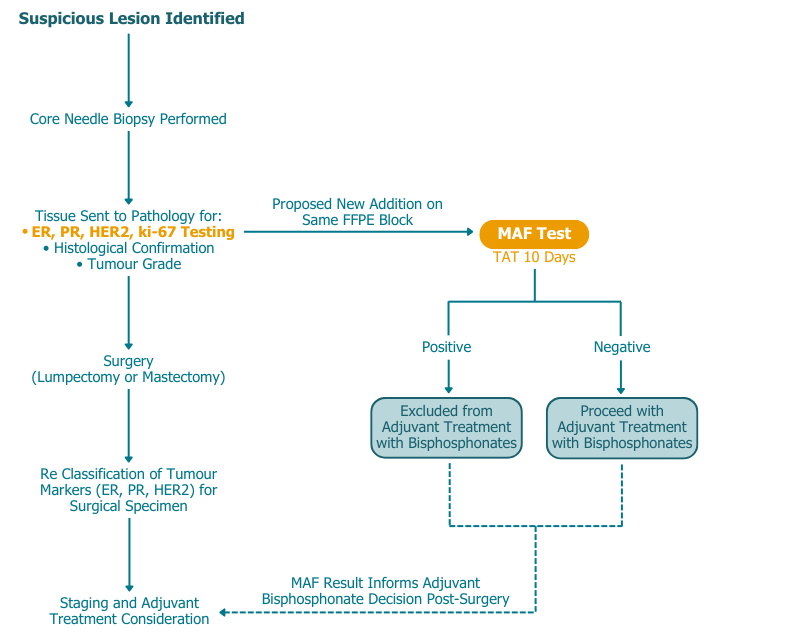
The MAF test integrates seamlessly into the breast cancer diagnostic and treatment pathway. It can be performed alongside ER, PR, and HER2 testing following the initial core needle biopsy. Results from the MAF test inform adjuvant bisphosphonate treatment decisions, helping to safely stratify postmenopausal women who are most likely to benefit from therapy.
Partnering with Your Clinic to Enhance Patient Care
Source Genomics provides clinics and healthcare providers with access to novel biomarker-driven tests across multiple cancer types. Partnering with us will enable access to:
Source Genomics provides accredited diagnostics developed in partnership with leading hospitals and research institutions. Together, we bring precision medicine into everyday clinical practice. Connect with our clinical specialists today to learn more.